
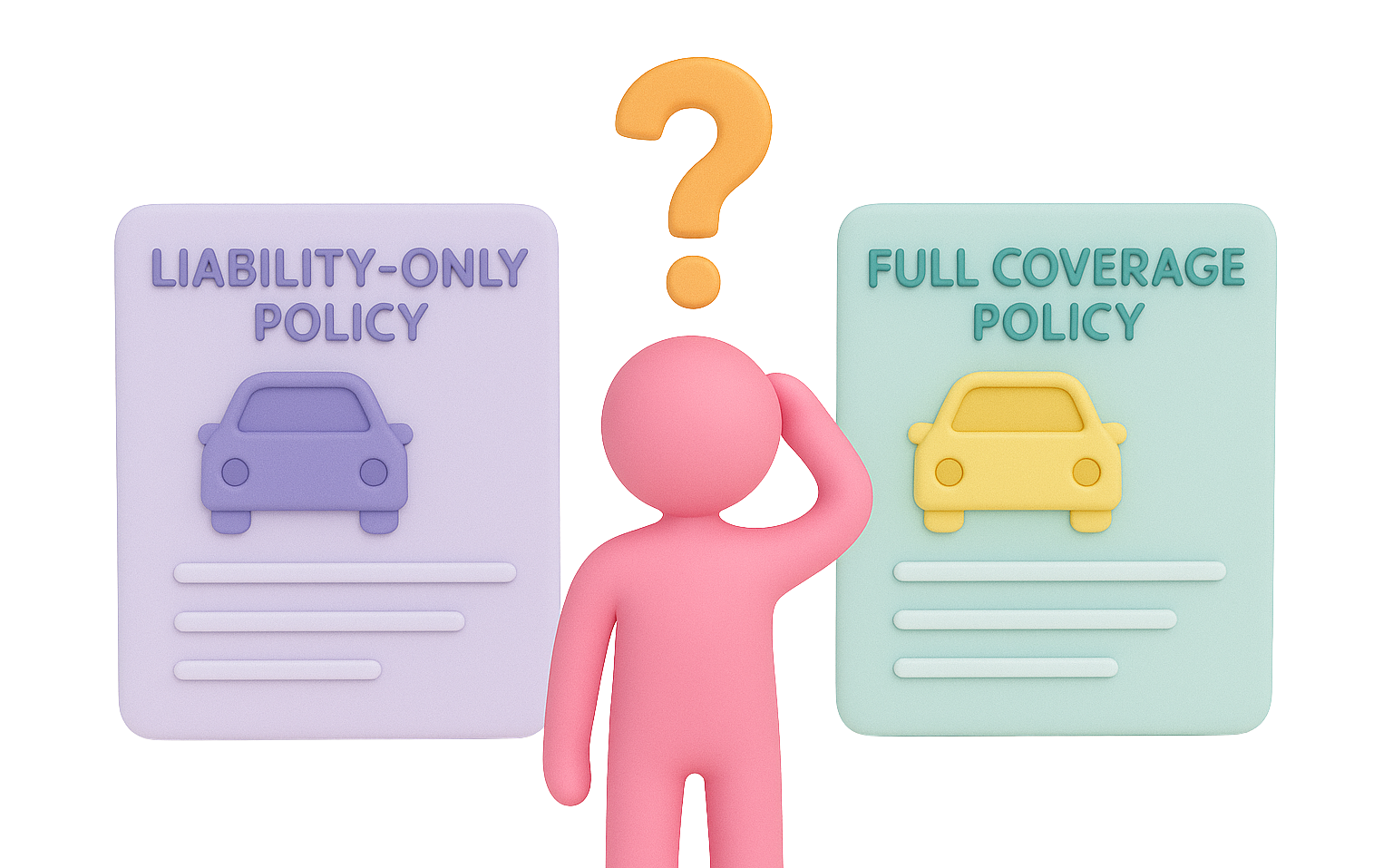
Car insurance is a mandatory financial protection system in the United States, designed to protect drivers from financial losses caused by accidents, theft, and damage. However, when choosing an insurance plan, most Americans face a major confusion: should they buy liability insurance or full coverage insurance?
At first glance, liability insurance looks cheaper and more attractive. On the other hand, full coverage provides broader protection but costs significantly more. The real question is not just which one is cheaper monthly, but which one actually saves more money in the long run.
This detailed guide explains the differences, costs, advantages, risks, and financial outcomes of both insurance types so you can make the smartest decision for your situation.
What Is Liability Insurance?
Liability insurance is the minimum legal requirement in almost every U.S. state. Its main purpose is to protect other people if you cause an accident.
It includes two main components:
Bodily injury liability: Covers medical expenses, lost wages, and legal costs for other people injured in an accident where you are at fault.
Property damage liability: Covers damage to another person’s vehicle, home, or property.
However, liability insurance does NOT cover:
- Your own vehicle damage
- Your medical expenses
- Theft or vandalism
- Natural disasters like floods or hail
In simple terms, liability insurance protects others from your mistakes, but it does not protect your own car.
Because of its limited coverage, it is the cheapest type of insurance available in the USA. On average, liability insurance costs between $600 and $900 per year, depending on the state, driving record, and insurer.
What Is Full Coverage Insurance?
Full coverage insurance is not a single policy. It is a combination of several types of coverage that protect both you and others.
It typically includes:
Liability insurance – required by law
Collision coverage – pays for your car damage after an accident
Comprehensive coverage – covers theft, fire, vandalism, floods, and natural disasters
Some policies may also include:
- Uninsured/underinsured motorist coverage
- Roadside assistance
- Rental car reimbursement
Full coverage is designed to provide complete financial protection for your vehicle and liability risks.
However, this extra protection comes at a cost. Full coverage insurance usually ranges from $1,200 to $2,800 per year, depending on the vehicle and driver profile.
Cost Comparison: Full Coverage vs Liability
The biggest difference between the two options is cost.
Liability insurance:
- $50 to $75 per month
- $600 to $900 per year
Full coverage insurance:
- $120 to $250 per month
- $1,200 to $2,800 per year
This means full coverage is usually 2 to 4 times more expensive than liability insurance.
On average, drivers pay around $1,000 to $1,800 extra per year for full coverage.
Why Full Coverage Costs More
Full coverage is more expensive because it protects your own vehicle, which increases the insurer’s risk.
Main reasons include:
1. Repair and replacement costs
If your car is damaged, insurance pays for repairs or replacement.
2. More types of risk coverage
It includes theft, fire, natural disasters, and accidents.
3. Higher claim probability
Drivers are more likely to file claims under full coverage than liability-only plans.
4. Vehicle value
New and expensive vehicles increase premiums significantly.
Which One Saves More Money?
The answer depends on how you define “saving money.”
Short-Term Savings: Liability Insurance Wins
If your goal is to reduce monthly expenses, liability insurance is clearly cheaper.
You save:
- $1,000 to $1,800 per year
- Lower monthly payments
- Minimum legal requirement coverage
This makes liability insurance ideal for budget-conscious drivers.
Long-Term Financial Protection: Full Coverage Wins
However, savings are not only about premiums.
If your car is damaged or stolen under liability insurance, you get zero financial support for your own vehicle.

Example:
- Car value: $12,000
- Accident happens
- Liability insurance payout: $0
- You pay full replacement cost
With full coverage:
- Insurance pays most of the repair or replacement cost (minus deductible)
So while full coverage costs more monthly, it can save you from major financial loss.
When Liability Insurance Saves More Money
Liability insurance is the better financial choice when:
1. Your car is low-value
If your car is worth less than $3,000–$5,000, full coverage may not be worth it.
2. You can afford repairs yourself
If you have savings for emergencies, you may not need extra protection.
3. You drive an older vehicle
Older cars have lower replacement value.
4. You want minimum legal coverage
It fulfills state requirements at the lowest cost.
When Full Coverage Saves More Money
Full coverage becomes more cost-effective when:
1. You have a new or financed car
Lenders usually require full coverage until the loan is paid.
2. Your vehicle is expensive
High-value cars cost more to repair or replace.
3. You live in high-risk areas
Areas with theft, flooding, storms, or heavy traffic increase risk.
4. You cannot afford major losses
If an accident would financially hurt you, full coverage provides protection.
Hidden Financial Reality
Most people only compare monthly premiums, but ignore risk exposure.
Liability insurance is cheaper only if nothing bad happens.
But if an accident occurs:
- Liability insurance = you pay everything for your own car
- Full coverage = insurance shares the financial burden
So the real question is not “which is cheaper,” but:
👉 Can you afford to lose your car without help?
Real-Life Example Comparison
Scenario 1: Liability Insurance
- Annual premium: $800
- Accident damage: $10,000
- Insurance payout: $0
- Total cost: $10,800
Scenario 2: Full Coverage
- Annual premium: $1,800
- Accident damage: $10,000
- Deductible: $500
- Insurance pays: $9,500
- Total cost: $2,300
In this case, full coverage saves a large amount of money.
Long-Term Cost Perspective
Over a 5-year period:
Liability insurance
- Lower premiums
- Higher risk of large financial loss
Full coverage
- Higher premiums
- Strong financial protection
If no accidents occur, liability insurance saves more money.
If even one major accident occurs, full coverage can save thousands.
Final Verdict
So, which saves more money?
- Liability insurance saves more money in monthly costs and is best for older or low-value cars.
- Full coverage saves more money in risk protection and prevents major financial losses.
The best choice depends on your car’s value, your budget, and your ability to handle unexpected expenses.
If you want maximum short-term savings, choose liability insurance.
If you want long-term financial security, choose full coverage insurance.